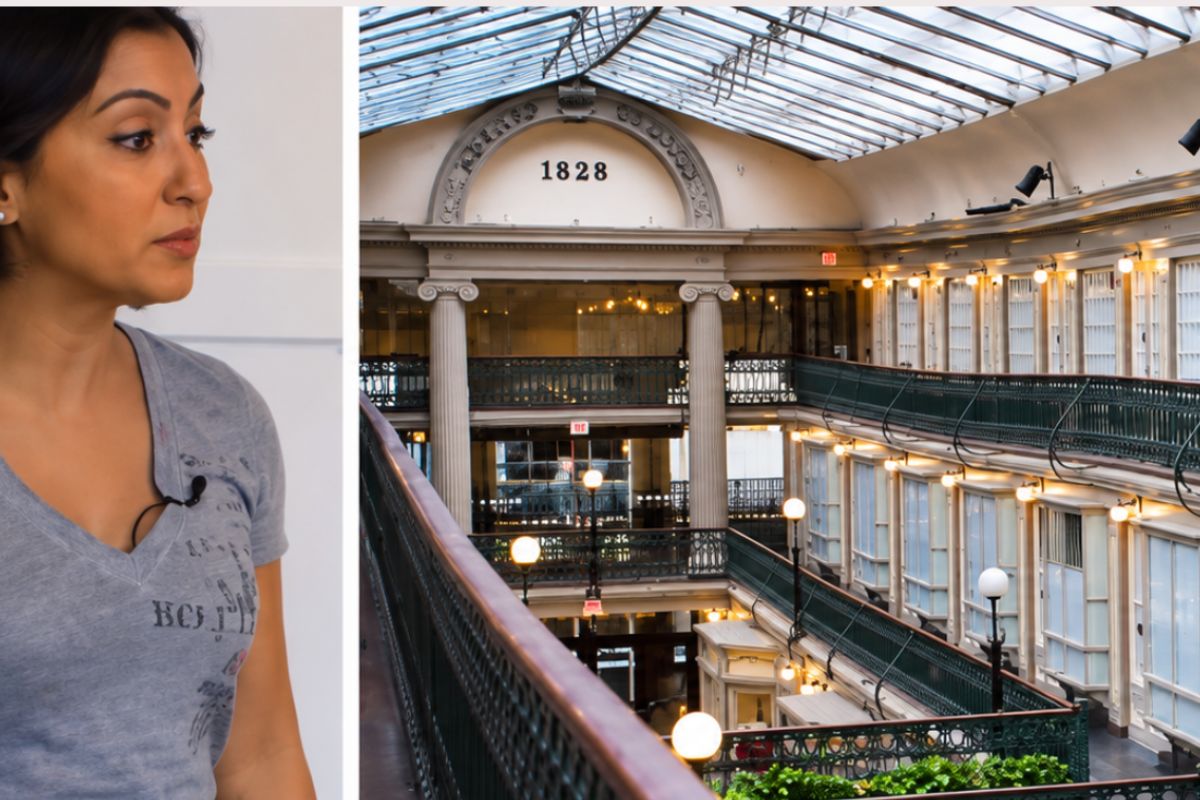
Imagine opening your front door and stepping into a shopping mall.
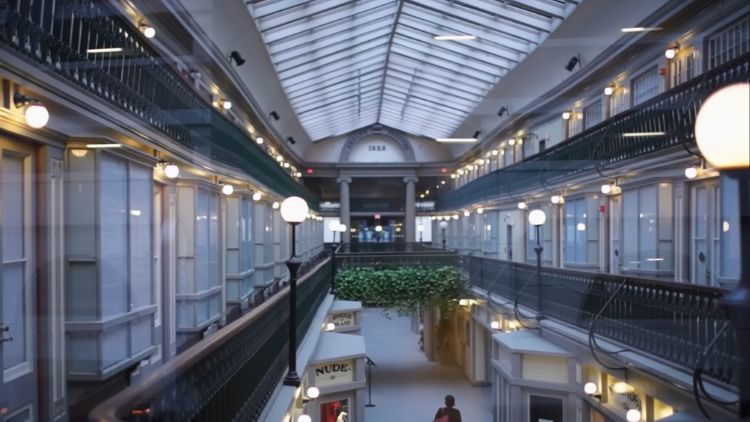
For residents of the historic Providence Arcade in Providence, Rhode Island, that’s everyday life. The building, which dates back to 1828, is considered America’s oldest indoor shopping mall. But today, people don’t just visit the landmark to shop — some actually call it home.
The upper floors of the building have been transformed into 48 residential units, including tiny micro-lofts measuring as little as 225 square feet.
Despite their small size, residents say the apartments offer something they value even more than extra space: an affordable and convenient way to live in the heart of downtown.

An Old Mall Gets a Surprising Second Life
The Providence Arcade was built nearly 200 years ago, long before the giant suburban shopping malls that became popular across America.
Over the years, however, the building struggled to remain economically successful as a traditional shopping center.
Owner and developer Evan Granoff needed to find a way to preserve the historic property while also making it financially sustainable.
His solution was unusual.
Instead of keeping all three floors dedicated to shopping, the upper levels were converted into apartments. The first floor remained retail space, creating a building where people could live upstairs and visit shops and businesses downstairs.
The result is a mix of old and new.
The building’s historic architecture remains, but behind some of those old storefronts are modern homes.
The Apartments Are Tiny
Calling these apartments small may be an understatement.
The smallest micro-lofts are only about 225 square feet.
That’s roughly the size of a larger hotel room.
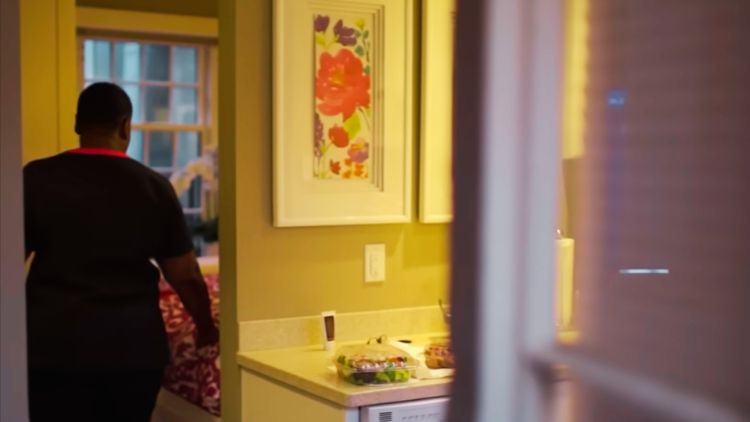
Making such a small space comfortable required careful planning. The apartments use built-in furniture and storage to make the most of nearly every available inch.
Residents have places to sleep, sit, store belongings and prepare simple meals without filling the apartment with bulky furniture.
The open layouts also help make the rooms feel larger.
Instead of separating the kitchen, bedroom and living room with walls, much of the apartment is one open space.
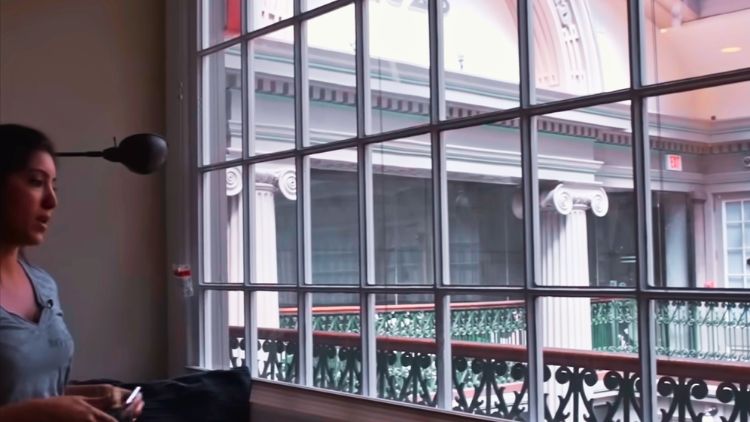
Large windows and natural light help prevent the apartments from feeling dark or closed in.
There’s One Big Thing Missing From the Kitchen
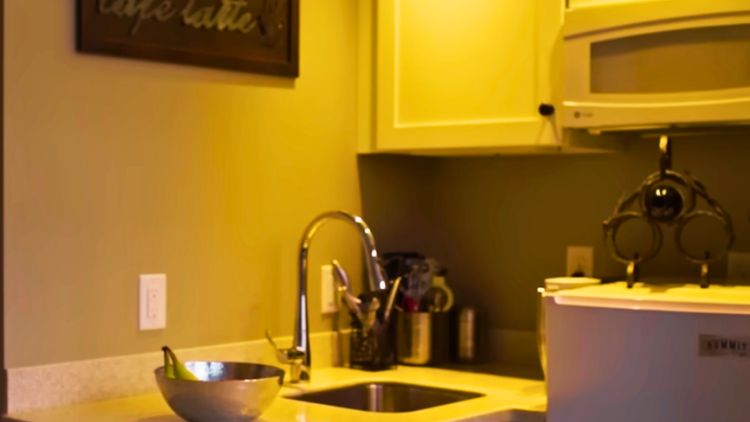
Residents shouldn’t expect a traditional kitchen.
The building operates under a “rooming house” classification, which helped make the unusually small units possible. Because of building and safety requirements, the apartments don’t have traditional cooking ranges.
Instead, residents have small efficiency kitchens and can use appliances such as microwaves.
For some people, not having a stove would be a deal breaker.
For others, it barely matters.
Many residents were attracted to the building because they lead busy lives and don’t spend much time cooking or sitting around their apartments.
The point isn’t necessarily to spend every hour inside 225 square feet. The apartments serve as comfortable home bases in the middle of the city.
A Doctor Says the Tiny Space Fits Her Lifestyle
One resident featured in the project is physician Naz Karim.
For her, the small apartment works because of her demanding schedule.
Karim has worked long shifts in an emergency department and has also traveled internationally for work, including plans to spend time working in Rwanda.
Maintaining a large home doesn’t make much sense for someone who may frequently be away.
She also isn’t bothered by the lack of a traditional stove.
Instead, Karim appreciates having a simple place where she can sleep, relax and keep her belongings without worrying about maintaining a much larger home.
She also likes the apartment’s open layout and natural light, which make the small space feel bigger than its square footage suggests.
And when she wants something to eat or drink, downtown Providence is right outside her door.
She compared the experience to having a particularly convenient hotel, with coffee, breakfast and other businesses nearby.

Another Resident Uses Her Loft as a Home Base
Sharon Kinnier, a cosmetic formulator, has another reason for choosing a micro-loft.
Kinnier lives in Baltimore but works at a laboratory in Providence, meaning she only needs a place in the city part of the time.
Instead of paying for a large apartment she doesn’t need, the tiny loft gives her a practical place to stay while working.
She appreciates the built-in storage and simple design.
There’s also an obvious advantage to living in such a tiny home: there isn’t much to clean.
The limited space encourages residents to think carefully about what they actually need.
Rather than filling rooms with furniture and belongings, everything has to serve a purpose.
For someone who only needs a comfortable place to sleep and relax while working in Providence, that simplicity can be a major advantage.

Downsizing Can Be a Big Change
Designer Amy Stetkiewicz had a different experience.
She downsized from a much larger house to a micro-loft in the Arcade.
Going from a traditional home to a tiny apartment might sound difficult, but Stetkiewicz embraced the change.
She also has the unusual advantage of living and working in the same building.
Rather than viewing the small apartment as limiting, she has described the experience as refreshing. The building also allows her to remain connected to her creative work and the community around her.
That sense of community is something other residents have noticed as well.
Because the building is relatively small and people share common areas, tenants can get to know one another in a way that may not happen in a huge apartment complex.

Living Above Shops Has Its Perks
One of the biggest advantages is downstairs.
The ground level is still dedicated to businesses, but the Arcade doesn’t rely on the large chain stores traditionally associated with malls.
Instead, it focuses on micro-retail, with smaller locally owned businesses and shops specializing in areas such as fashion, art and design.
That means residents have businesses practically outside their apartments.
The location also puts them in the middle of downtown Providence, where restaurants, coffee shops and other services are nearby.
For someone who enjoys city life, the surrounding neighborhood essentially becomes an extension of the apartment.
Small Apartments Come With Smaller Bills
The financial benefits extend beyond rent.
A 225-square-foot apartment doesn’t require much energy compared with a large house or apartment.
That can mean much lower utility bills.
Residents also don’t need to purchase as much furniture, and built-in storage reduces the need for additional cabinets, dressers and shelves.
For people trying to simplify their lives or save money, those savings can add up.
How Much Does It Cost to Live There?
Living in the Providence Arcade is still relatively affordable compared with many other downtown options. As of 2026, micro-lofts have been listed starting at around $1,390 per month, with some furnished units going for about $1,600. By comparison, the average studio apartment in downtown Providence is around $2,051 per month.
Buying is also an option. In April 2026, a tiny 265-square-foot loft was listed for $225,000, plus an HOA fee of about $198 per month.
Could You Live in 225 Square Feet?
Micro-lofts certainly aren’t for everyone.
Someone with a large family, lots of belongings or a passion for cooking might find 225 square feet far too restrictive.
But the Providence Arcade shows that bigger isn’t always better.
For busy professionals, frequent travelers, people who live in a city only part time or those simply looking to downsize, a tiny apartment can provide exactly what they need.
The unusual project also helped give a nearly 200-year-old landmark a new purpose.